
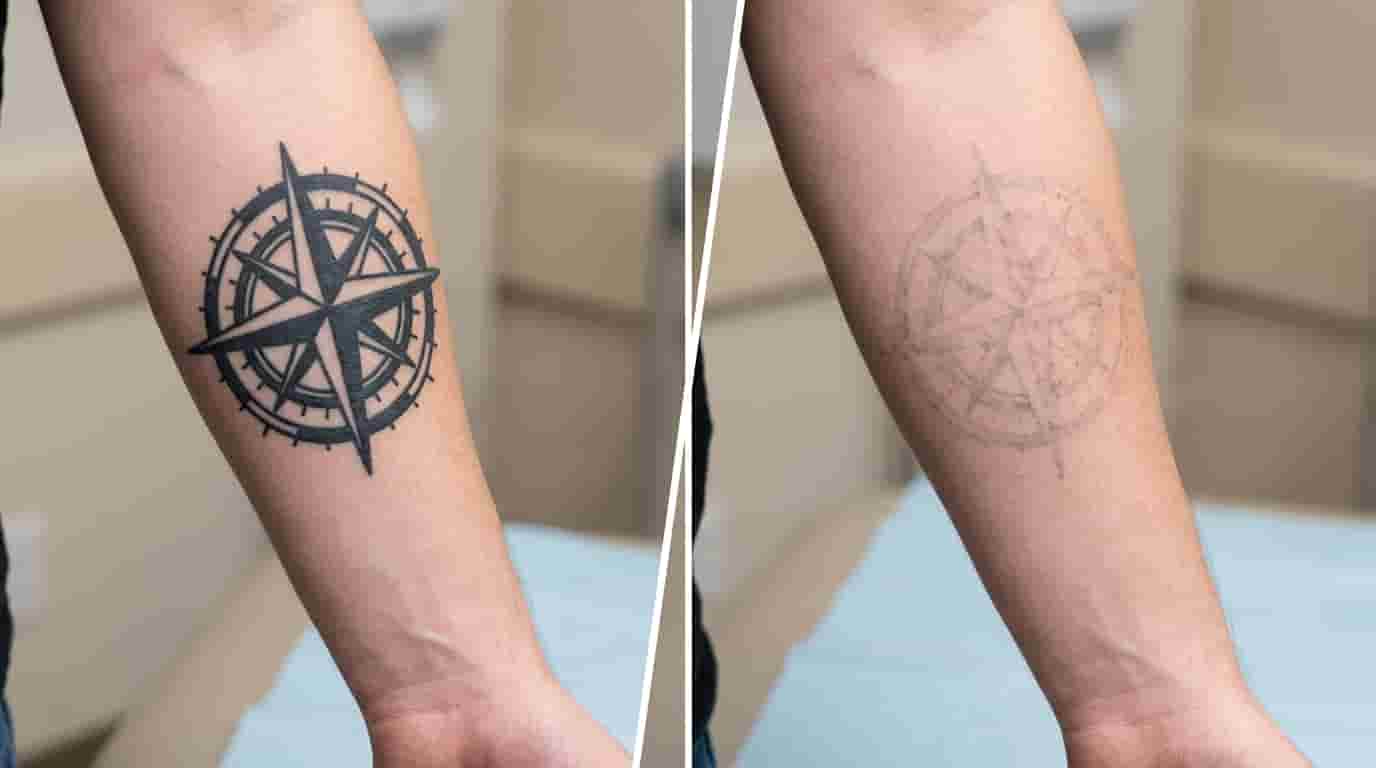
Tattoo Removal for Light Skin: What to Expect and How Well Does It Work?
Introduction
Tattoo Removal for Light Skin can be highly effective, but skin tone is only one factor that determines how a tattoo responds to treatment. If you have fair, pale, or light skin and are considering clearing unwanted ink, you might wonder if your specific complexion offers an advantage, what safety precautions apply, and whether your skin type can achieve complete clearance.
The biological relationship between laser energy, natural skin pigment, and embedded tattoo ink is central to every removal procedure. Because laser technology targets concentrated pigment, having less natural pigment in the surface layers of your skin changes how light energy travels through tissue.
However, having light skin does not make the process instantaneous, risk-free, or guaranteed to leave zero trace. Factors such as ink chemical composition, pigment depth, tattoo age, size, body location, and overall healing capacity play equally critical roles in your outcome.
This comprehensive guide breaks down how tattoo removal works on fair skin, what risks exist, which ink colors prove most stubborn, what to expect during healing, and how to choose a qualified specialist.
How Does Tattoo Removal Work on Light Skin?
How Laser Tattoo Removal Targets Ink
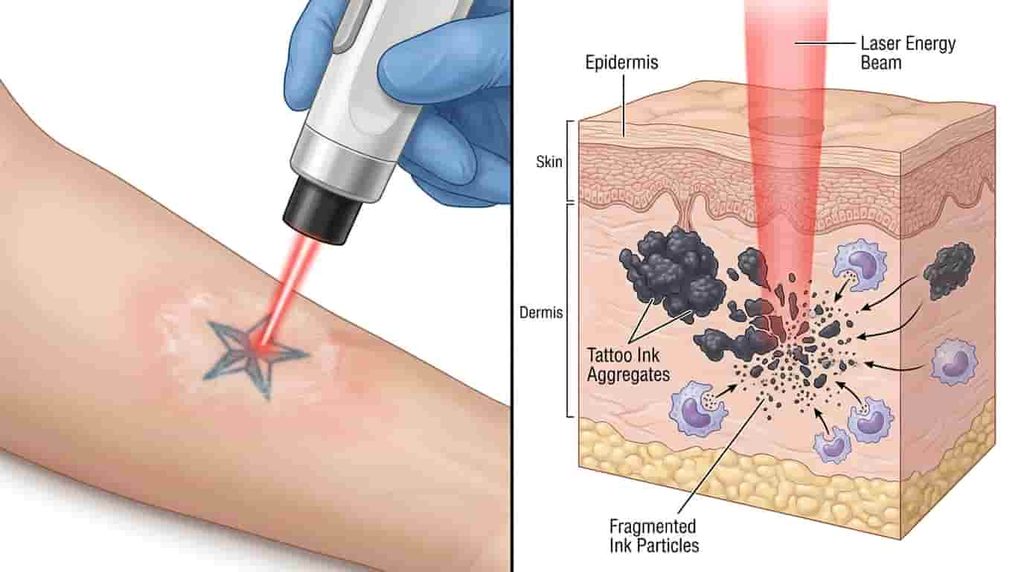
Laser tattoo removal relies on a principle called selective photothermolysis. The laser device emits ultra-short pulses of high-intensity light energy that pass through the outer layer of skin (the epidermis) to reach the deeper layer (the dermis), where tattoo ink is trapped within immune cells.
When the embedded tattoo ink absorbs this rapid spike of thermal energy, it vibrates violently and shatters into microscopic fragments. Over the following six to twelve weeks, your body’s lymphatic system filters away these micro-particles through natural metabolic pathways.
Multiple sessions are always required because tattoo ink is deposited at varying depths throughout the dermis. Each laser pass shatters the top layer of accessible ink, allowing subsequent sessions to target deeper pigment layers as the skin heals.
Why Light Skin Can Be an Advantage for Some Treatments
From an optical standpoint, light skin—typically categorized as Fitzpatrick Skin Types I, II, and III—presents lower baseline concentrations of natural melanin.
Because melanin absorbs light energy across a broad spectrum of wavelengths, a lower concentration of surface melanin reduces the risk of competitive absorption. The laser pulse encounters minimal surface obstruction, allowing a higher percentage of thermal energy to strike the target tattoo ink in the dermis rather than absorbing into the surface skin.
This optical contrast gives practitioners greater flexibility when selecting laser parameters. On fair complexions, technicians can often use higher energy densities (fluence) or specific short wavelengths without triggering immediate epidermal thermal burns.
Does Light Skin Guarantee Better Results?
No. Having fair skin does not guarantee faster clearance or perfect results. While low surface melanin minimizes surface absorption, it does not alter the physical or chemical properties of the tattoo ink buried beneath.
Your overall clearance rate depends heavily on variables unrelated to skin tone:
- Ink Composition and Chemistry: Modern tattoo inks contain metallic salts, organic compounds, and plastic carriers that respond differently to light energy.
- Ink Density and Layering: Densely saturated professional tattoos or cover-up designs contain significantly more ink mass than light, linework-only designs.
- Dermal Placement: Ink placed deep in the lower dermis takes longer to break down than shallow ink.
- Regional Blood Circulation: Tattoos located on areas with robust vascularity (neck, chest, upper arms) clear faster than those on extremities (wrists, ankles, feet).
- Individual Immunological Health: Your body’s lymphatic efficiency dictates how fast shattered ink particles are cleared from the tissue.
To better understand how natural skin pigmentation interacts with laser settings across all complexions, read our foundational overview on Tattoo Removal and Skin Tone: Does Skin Color Affect Treatment?
Tattoo Removal for Light Skin: Is It Safe?

Common Short-Term Treatment Effects
While laser removal is a non-invasive procedure, it creates controlled thermal micro-trauma in the skin. Immediately following a treatment session, fair skin typically exhibits predictable inflammatory reactions:
- Erythema (Redness): The treated area turns vivid red due to increased localized blood flow.
- Edema (Swelling): Tissue swells as the immune system responds to thermal stimulation.
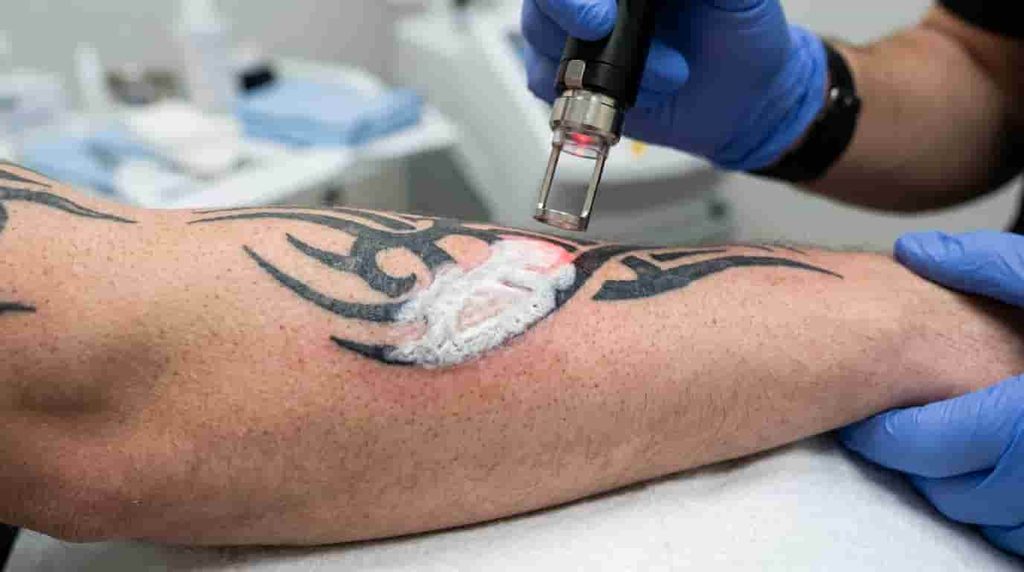
- Frosting: A temporary white, bubbly appearance caused by rapid gas bubble formation within the tissue, lasting 15 to 30 minutes post-treatment.
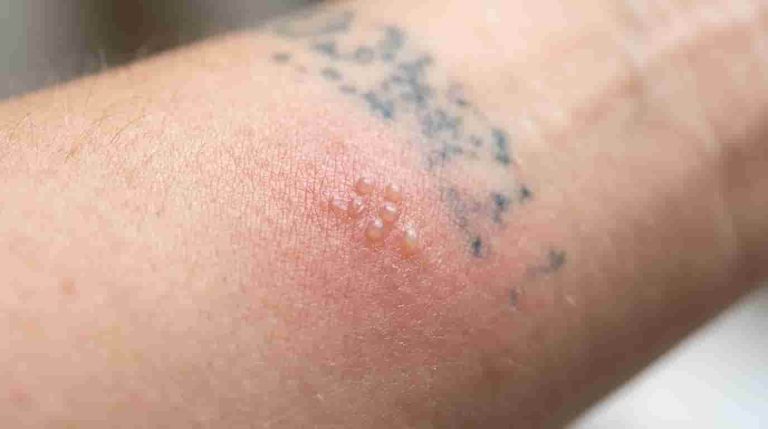
- Blistering and Pinpoint Bleeding: High energy absorption can cause small, fluid-filled epidermal blisters or microscopic bleeding points, which are normal parts of the healing response.
- Crusting and Scabbing: As blisters settle, thin crusts may form over the area over the first week.
| Short-Term Effect | Typical Duration | Expected Presentation | Care Strategy |
| Frosting | 15–30 minutes | White, chalky surface gas bubbles | None; resolves spontaneously |
| Erythema (Redness) | 24–72 hours | Vivid red, warm-to-touch skin | Cool compresses, quiet rest |
| Edema (Swelling) | 1–5 days | Localized puffiness around artwork | Elevation, cool gel packs |
| Blistering/Crusting | 3–10 days | Intact fluid blisters or thin scabs | Sterile ointment, keep covered |
Possible Pigmentation Changes
Fair skin is generally less prone to severe, permanent pigment loss than deeply pigmented skin, but it remains susceptible to post-treatment discoloration if treated aggressively or exposed to sunlight.
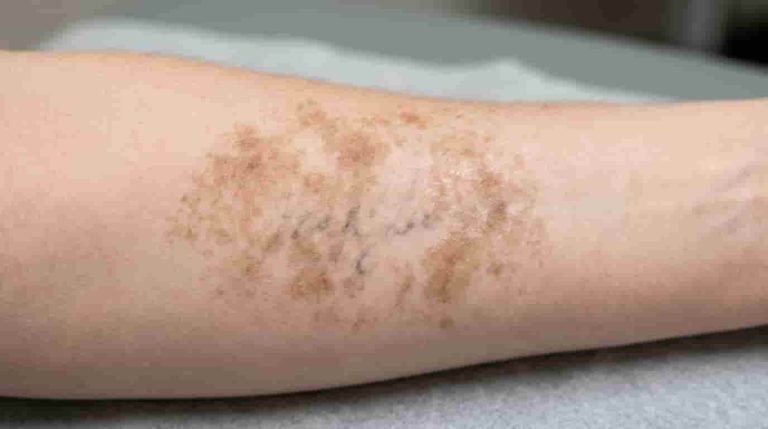
- Hyperpigmentation: Thermal irritation or unshielded UV exposure can cause melanocytes to overproduce melanin, leaving dark brown or tan smudges across the treated zone.
- Hypopigmentation: Excessive energy can temporarily suppress melanocytes, leaving patches that appear lighter or paler than your natural baseline skin tone.
If you develop dark patches or persistent shadowing during recovery, review our clinical guide on Tattoo Removal and Hyperpigmentation: Causes, Risks and Treatment Options for recovery steps.
Why Professional Assessment Matters
Self-diagnosing tattoo characteristics or attempting unverified treatments can lead to permanent skin damage. A qualified practitioner must evaluate your skin barrier, review your medical history, inspect tattoo density, perform a pre-treatment patch test, and select appropriate laser parameters tailored to your complexion.
What Should You Expect During the Tattoo Removal Process?
Before the First Session
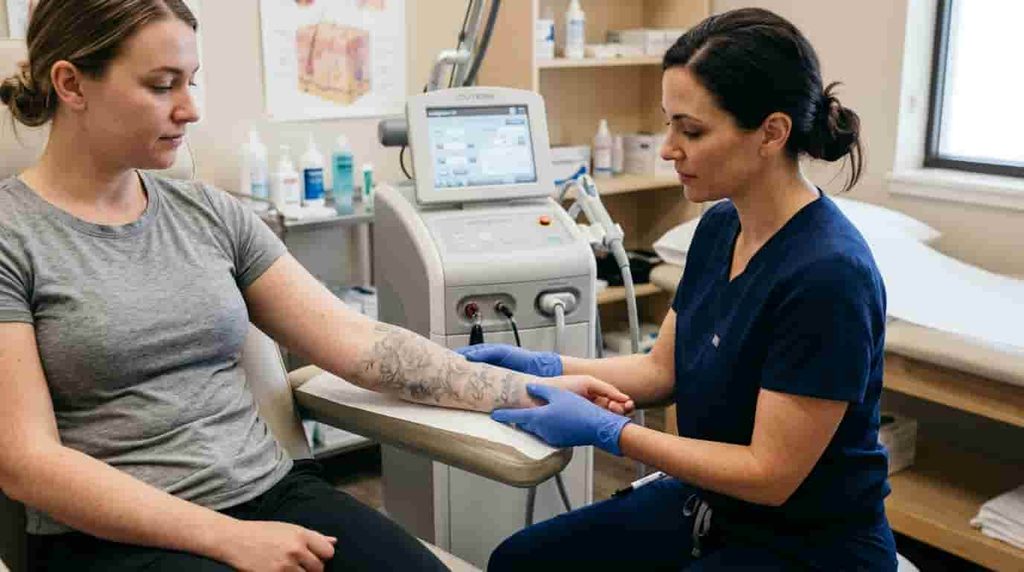
Your journey begins with a thorough clinical consultation. The provider evaluates your tattoo’s color spectrum, estimates ink depth, reviews your medical background, and checks for photosensitizing medications. A small patch test is often conducted on a discrete edge of the tattoo to observe how your skin and ink respond before proceeding with a full session.
During Treatment
On the day of treatment, you and your practitioner wear protective eyewear tailored to the specific laser wavelength being used. The skin is cleansed, and local cooling (such as chilled air or ice packs) is applied to numb the surface.
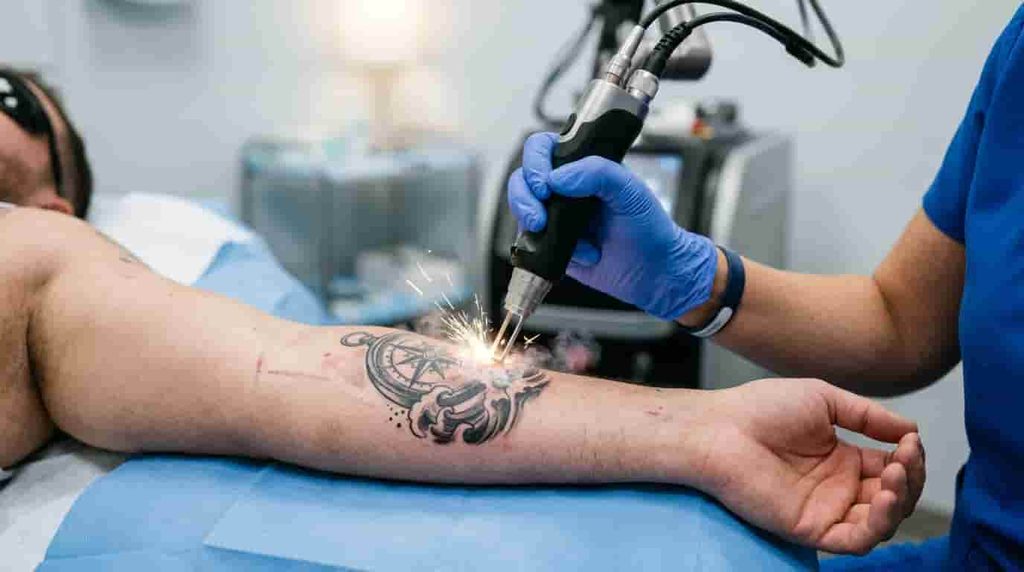
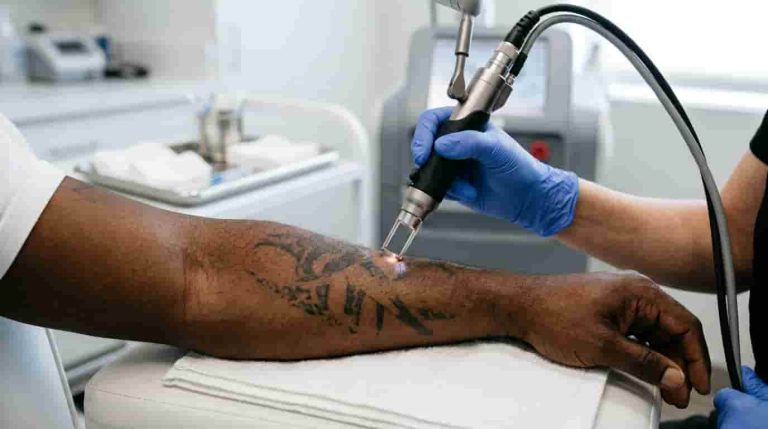
The technician glides the laser handpiece over the design, firing rapid pulses into the skin. Patients often describe the sensation as similar to a rubber band snapping against the skin accompanied by brief flashes of intense heat. A small-to-medium tattoo usually takes only a few minutes to process.
After Treatment
Immediately after the session, the area will look frosted, red, and swollen. The technician applies a soothing topical barrier ointment (like petroleum jelly) and covers the site with a sterile, non-stick bandage.
Over the next two weeks, the treated skin goes through a healing cycle that may include mild blistering, itching, and flaking. During this time, the original tattoo may look slightly darker or raised before gradual fading begins.
Why Patience Matters
Laser tattoo removal requires time between visits. Sessions must be spaced 6 to 12 weeks apart—and sometimes longer for fair skin prone to lingering redness. Spacing sessions gives your immune system enough time to clear shattered pigment particles and allows the dermal tissue to recover completely. Rushing sessions does not speed up ink removal; it increases the risk of tissue trauma and permanent scarring.
Which Tattoo Colors Are Hardest to Remove on Light Skin?
Tattoo color often plays a bigger role in treatment complexity than skin tone. Because different pigment colors absorb light at specific wavelengths, multicolor designs require precise wavelength matching.
Black and Dark Ink
Black, deep gray, dark brown, and dark blue pigments are the easiest to target. Black ink absorbs all wavelengths of light efficiently, making it particularly responsive to standard 1064 nm Nd:YAG lasers. Even on fair skin, however, dense black tribal line work requires multiple passes over time to break down fully.
Bright Colors
Bright colored inks absorb light across selective, narrow bands of the spectrum, requiring specialized wavelengths:
- Red, Orange, and Violet: Respond well to a 532 nm wavelength, though this wavelength is strongly absorbed by surface skin and requires careful cooling.
- Green and Cyan: Require specialized 755 nm Alexandrite or 694 nm Ruby laser wavelengths. Green ink can be stubborn and often takes more sessions to fade than black ink.
- Yellow and Orange: Absorb visible light poorly and can be challenging to clear, often requiring high-peak-power picosecond systems.
White and Flesh-Toned Pigments
White ink and flesh-toned cover-up pigments contain titanium dioxide or zinc oxide. When hit by laser light, these metallic oxides can undergo an immediate chemical reduction process, turning dark gray or black.
This unexpected darkening can complicate treatment. Experienced providers usually test white or flesh-toned areas carefully before proceeding.
Multicolor Tattoos
Tattoos containing multiple colors require a multi-wavelength strategy. A practitioner may use a 1064 nm setting for black borders during one pass, switch to a 532 nm setting for red accents, and use a 755 nm setting for green shading. Because each wavelength targets tissue differently, multicolor removal requires more careful session planning.
How Many Sessions Does Tattoo Removal for Light Skin Take?

There is no universal number of sessions for complete tattoo removal. While light skin provides clear optical access to dermal ink, total session counts depend on your tattoo’s unique characteristics and your body’s clearance rate.
On average, professional tattoos on fair skin take 6 to 12+ sessions to achieve high-level fading or near-complete clearance. Amateur tattoos with shallow, sparse ink may take 3 to 6 sessions.
Factors that lead to fewer sessions (3–6):
- Amateur or single-pass ink application
- Black or dark blue pigment exclusively
- Older, naturally degraded ink
- Placement on the torso, neck, or head (high blood flow)
Factors that lead to more sessions (8–12+):
- Densely saturated professional artwork or cover-ups
- Multicolor designs (especially bright green, light blue, or yellow)
- Fresh or recently touched-up tattoos
- Placement on distal extremities (wrists, ankles, or feet)
When discussing treatment expectations during a consultation, ask:
- Which specific laser wavelengths will be used for my tattoo’s color spectrum?
- What level of fading can I realistically expect based on my ink density?
- How long should I wait between sessions to let my skin recover fully?
Can a Tattoo Be 100% Removed?
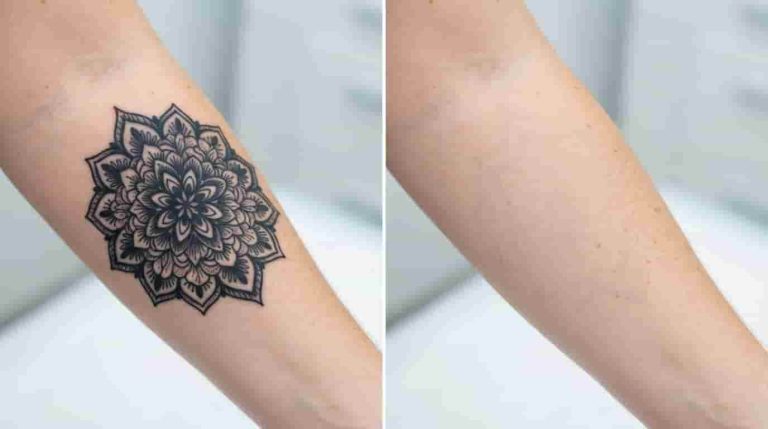
Complete, flawless removal with zero trace remaining is possible for many tattoos, but it cannot be guaranteed for every design.
Realistic Removal Outcomes:
- Near-Complete Clearance: The ink is cleared completely, leaving skin that matches surrounding tissue in color and texture.
- Subtle Ghosting: The ink is visually cleared, but a faint, translucent shadow remains visible under bright light.
- Residual Pigment: Stubborn traces linger deep in tissue (most common with vibrant green, light blue, or yellow inks).
- Textural Shadowing: The ink is completely removed, but subtle scarring or textural changes from the original tattoo needle remain visible.
Whether a tattoo can be cleared completely depends on ink chemistry, application depth, scarring from the original tattooing needle, and your body’s immune response. An honest provider will promise realistic fading rather than flawless perfection.
What Can Affect Tattoo Removal Besides Skin Tone?
Skin tone is only one factor in treatment planning. A comprehensive assessment considers all physical and chemical variables that impact ink breakdown:
- Ink Color: Dark pigments absorb laser light easily; light and bright pigments require specific wavelengths.
- Ink Depth: Deeply placed dermal ink requires higher thermal energy or longer wavelengths to break down.
- Ink Density: Heavy saturation requires more total energy delivered over more sessions.
- Tattoo Size: Larger designs require longer treatment times per session and extra care during healing.
- Anatomical Location: Tattoos on areas with strong regional blood flow (chest, neck, arms) clear faster than those on distal extremities (hands, feet).
- Tattoo Age: Older tattoos feature naturally fragmented ink particles that clear more readily than fresh, dense ink.
- Application Technique: Professional tattoos place dense ink deeper into the dermis than amateur tattoos.
- Laser Technology: Modern picosecond lasers shatter ink using pressure rather than heat alone, making them more efficient than older nanosecond devices.
- Individual Immunological Health: Proper hydration, active circulation, and healthy metabolic function help your body flush away shattered ink faster.
Who Should Not Get Tattoo Removal?
While laser tattoo removal is generally safe for fair complexions, certain medical states and skin conditions require delaying or avoiding treatment:
- Active Skin Infections or Open Wounds: Never fire lasers over active bacterial, fungal, or viral infections (such as active Herpes Simplex outbreaks).
- Recent Sun Exposure or Tanning: Tanned fair skin contains active melanocytes, increasing the risk of thermal burns, blistering, and post-inflammatory hyperpigmentation.
- Pregnancy and Breastfeeding: Laser procedures are contraindicated during pregnancy and nursing to avoid systemic stress and unpredictable pigment responses from hormonal changes.
- History of Keloid or Hypertrophic Scarring: Individuals prone to raised scar tissue must approach thermal treatments with caution.
- Photosensitizing Medications: Systemic drugs like oral isotretinoin (Accutane) or certain antibiotics increase light sensitivity, requiring a washout period before treatment.
When to Seek Immediate Medical Help:
Contact a physician immediately if you experience spreading redness, red streaks, skin that feels hot to the touch, severe or worsening pain lasting beyond 72 hours, persistent blistering accompanied by cloudy or yellow discharge, or systemic symptoms such as fever and chills.
If you experience severe thermal blistering or skin reactions post-treatment, review our care guide on Tattoo Removal Burns: Causes, Symptoms, Treatment and Healing
for healing protocols and infection prevention strategies.
What I Wish I Knew Before Laser Tattoo Removal
Knowing what to expect before starting treatment helps set realistic goals and leads to better decisions throughout the process.
- Removal Is a Process, Not an Instant Eraser: Fading happens gradually over many months, requiring patience and consistent care between visits.
- Fading Happens Between Sessions: The laser breaks up the ink during your visit, but your body’s immune system clears it away over the following weeks.
- Your Skin Will React: Expect temporary redness, swelling, frost-like bubbling, and light crusting after each session.
- Tattoo Color Shapes the Strategy: A simple black outline clears much faster than a complex, multicolor sleeve.
- Aggressive Settings Carry Risk: Firing a laser at maximum energy does not clear ink faster; it increases the risk of blistering, scarring, and pigment changes.
- Cost Reflects Technology and Safety: Choosing a provider based solely on the lowest price can lead to treatment with outdated equipment or inexperienced technicians.
- Clear Aftercare Is Essential: Proper post-treatment care—keeping the area clean, cool, and protected from UV light—plays a major role in how well your skin heals.
How Much Does Tattoo Removal for Light Skin Cost?
Tattoo removal pricing varies widely based on geographic location, clinic standards, equipment technology, and tattoo complexity. Clinics typically price treatments per session based on the size of the artwork.
Pricing factors include:
- Tattoo Size and Surface Area: Measured in square inches or standard categories (small, medium, large, extra-large).
- Color Complexity: Multicolor tattoos requiring multiple wavelengths often carry higher per-session costs.
- Laser Technology Used: Advanced picosecond platforms generally cost more per session than older Q-switched units, though they may require fewer total visits.
- Provider Credentials: Treatments performed by board-certified dermatologists or licensed medical specialists cost more than those at non-medical spas.
When comparing pricing, remember that a low per-session cost on an outdated laser can end up costing more overall if it takes twice as many sessions to achieve fading.
How to Choose a Tattoo Removal Clinic or Specialist

Selecting a qualified practitioner is the most effective way to protect your skin barrier and achieve safe ink clearance.
Clinic Selection Criteria:
- Medical oversight by a board-certified physician or dermatologist
- Access to modern multi-wavelength laser technology (Picosecond or Q-switched systems)
- Transparent discussion of risks, costs, and expected treatment timelines
- Mandatory pre-treatment patch test protocols
- Detailed written pre- and post-treatment care instructions
- A comprehensive portfolio of before-and-after photos demonstrating results on light skin
Questions to Ask Before Booking
During your initial consultation, ask these essential questions:
- What specific laser technology and wavelengths do you recommend for my tattoo’s colors?
- How do you adjust energy settings for my specific skin type to avoid pigment changes?
- Do you perform a mandatory patch test before starting treatment?
- What protocol do you follow if blistering or hyperpigmentation occurs?
- How many weeks do you require between visits to allow proper skin recovery?
- Can you show me before-and-after cases of similar tattoos treated on light skin?
Tattoo Removal Before and After: What Should You Look For?
Reviewing before-and-after portfolios helps set realistic expectations, but photos should be evaluated carefully.
- Match Your Complexion: Focus on photos showing patients with fair or light skin tones similar to yours.
- Look for Consistent Lighting: Ensure before-and-after photos share similar lighting, angles, and camera settings. Flashing bright light onto an “after” photo can wash out residual ink.
- Check Skin Texture: Look closely at the “after” skin. The area should appear smooth and natural, without shiny scar tissue or altered skin texture.
- Look for Complete Case Histories: Check if the portfolio states how many total sessions were required to achieve the final result shown.
Tattoo Removal Options for Light Skin
Laser Tattoo Removal
Laser removal remains the primary gold-standard treatment. Advanced Q-switched and picosecond platforms emit targeted light frequencies to shatter dermal ink without causing heat damage to surrounding tissue. Picosecond systems deliver energy in trillionths of a second, shattering ink into microscopic dust while minimizing heat diffusion into the skin.
Other Tattoo Removal Approaches
- Surgical Excision: Involves surgically cutting out the tattooed tissue and suturing the surrounding skin back together. Excision guarantees complete ink removal in one step, but it leaves a permanent surgical scar and is generally limited to small tattoos.
- Dermabrasion: Mechanically sands away outer skin layers to reach dermal ink. This process causes significant tissue trauma, carries high infection risks, and often leads to permanent scarring.
What About Tattoo Removal Creams?
Over-the-counter fading creams claim to dissolve tattoo ink at home using topical acids or bleaching agents. These creams cannot penetrate into the deep dermal layer where tattoo ink sits. At best, they exfoliate surface skin; at worst, they cause chemical burns, severe contact dermatitis, and long-lasting discoloration.
Common Mistakes to Avoid During Tattoo Removal
- Choosing a Clinic Based Only on Price: Prioritizing low cost over specialist credentials, modern equipment, and safety protocols.
- Expecting Instant Erasure: Failing to give your body enough time between sessions to clear shattered ink naturally.
- Assuming Light Skin Means Zero Risk: Overlooking the potential for post-treatment redness, blistering, or hyperpigmentation on fair skin.
- Ignoring Aftercare Instructions: Failing to keep the treated area clean, cool, covered, and protected from UV light during healing.
- Treating Every Ink Color the Same: Expecting bright greens, blues, or yellows to clear as fast as black ink.
- Trying Aggressive DIY Creams or Home Kits: Using harsh chemical creams or abrasive tools that cause chemical burns and severe scarring.
- Demanding Maximum Laser Energy: Pushing for higher energy settings in hopes of faster fading, which increases the risk of tissue scarring.
FAQ: Tattoo Removal for Light Skin
Is tattoo removal easier on light skin?
Lighter skin provides an optical advantage because lower surface melanin levels allow laser light to target dermal ink with minimal surface energy loss. However, overall ease still depends heavily on ink color, depth, density, and tattoo age.
Does laser tattoo removal work on fair skin?
Yes. Laser tattoo removal is effective on fair skin. Practitioners can utilize a broad range of wavelengths and parameters to target dark and colored inks safely.
Can tattoo removal cause lighter or darker skin?
Yes. Thermal injury from laser light can cause temporary hyperpigmentation (darkening) or hypopigmentation (lightening). Proper laser settings, sun protection, and careful aftercare reduce these risks.
What is the hardest tattoo color to remove?
Bright green, light blue, yellow, and pastel shades are generally the hardest colors to clear because they require specialized laser wavelengths and high peak energy to break down.
Who cannot have laser tattoo removal?
Laser removal should be avoided or delayed by individuals who are pregnant or nursing, those with active skin infections, people taking photosensitizing medications, or anyone with recent unshielded sun exposure.
Conclusion: Tattoo Removal for Light Skin
Tattoo Removal for Light Skin offers a reliable, clinically proven path for clearing unwanted ink. Low baseline surface melanin allows laser energy to penetrate directly to dermal ink with minimal surface absorption, giving specialists flexibility when selecting parameters. However, fair skin is not immune to post-treatment redness, swelling, or pigment shifts, and clearance rates still depend on ink color, density, depth, and individual healing.
Achieving clean, healthy skin requires patience, realistic expectations, and proper post-treatment care. Working with an experienced laser specialist who understands pigment mechanics ensures your tattoo is faded safely while protecting your skin barrier.
To learn more about how skin tone affects tattoo removal across all complexions, read our related guides on Tattoo Removal for Dark Skin, Tattoo Removal and Skin Tone, Tattoo Removal and Hyperpigmentation, and Tattoo Removal Burns
.
One Comment