
Tattoo Removal and Skin Tone: Does Skin Color Affect Treatment?
Introduction
Tattoo Removal and Skin Tone are deeply interconnected factors that directly shape how laser energy interacts with your body, how treatment parameters are established, and how safely your skin heals. If you are considering clearing unwanted ink, your natural skin color is one of the most important variables your provider will evaluate. A common initial concern for many individuals is whether elevated natural skin pigmentation renders the procedure unsafe or completely ineffective.
The short answer is clear: professional tattoo removal can be performed across a wide spectrum of complexions. However, skin color significantly alters the clinical approach. Because laser systems rely on light energy absorbed by specific targets, natural melanin in the upper layers of the skin can compete with the dark ink buried deeper in the dermis.
Understanding this biological interplay helps set realistic expectations regarding timelines, potential risks, and required precautions. From assessing competitive absorption to choosing an experienced practitioner, managing your natural complexion alongside tattoo ink requires an individualized approach.
This guide breaks down everything you need to know about how different skin tones respond to removal procedures, potential pigment changes, and how to choose a specialist who can protect your skin barrier while maximizing ink clearance.
Does Skin Tone Affect Tattoo Removal?
Why Skin Color Matters During Laser Tattoo Removal
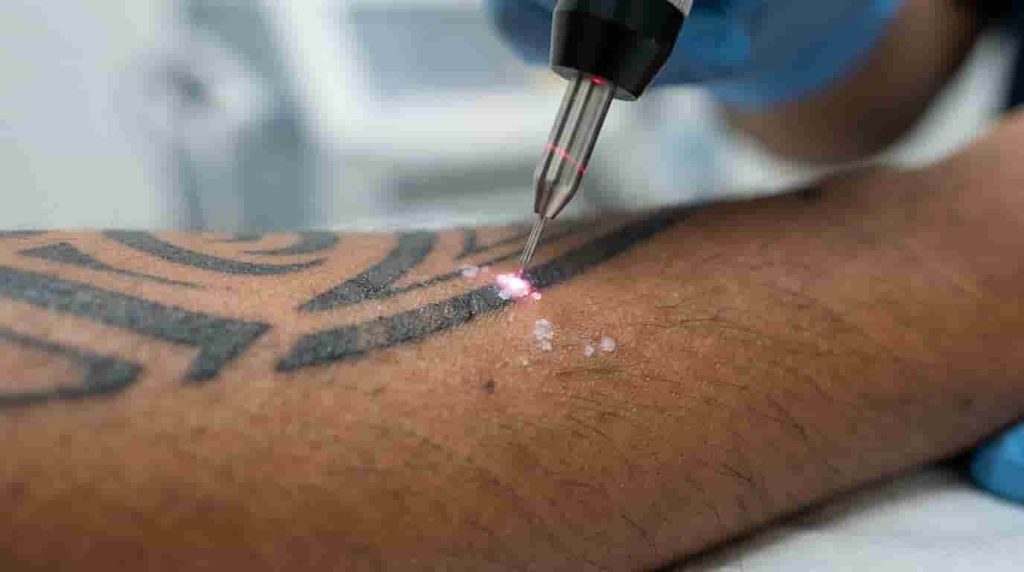
To understand why skin tone influences treatment planning, it helps to review the core mechanics of laser tattoo removal. Laser devices function through a process called selective photothermolysis. The machine delivers ultra-short pulses of high-intensity light energy designed to pass through the outer layer of skin (epidermis) and be absorbed specifically by target ink particles trapped in the deeper layer (dermis). When the ink absorbs this rapid spike of energy, it shatters into microscopic fragments that your lymphatic system gradually filters away over time.
However, tattoo ink is not the only light-absorbing target present in human tissue. Your skin contains a natural pigment called melanin, produced by cells called melanocytes in the basal layer of the epidermis. Melanin absorbs light across a broad spectrum of wavelengths.
When a laser pulse hits the skin, natural epidermal melanin can absorb a portion of that thermal energy before it ever reaches the tattoo ink. This phenomenon—known as competitive light absorption—means that the contrast between your natural skin color and the color of your tattoo ink dictates how laser parameters must be set to ensure safety and efficacy.
Is Tattoo Removal Possible on All Skin Tones?
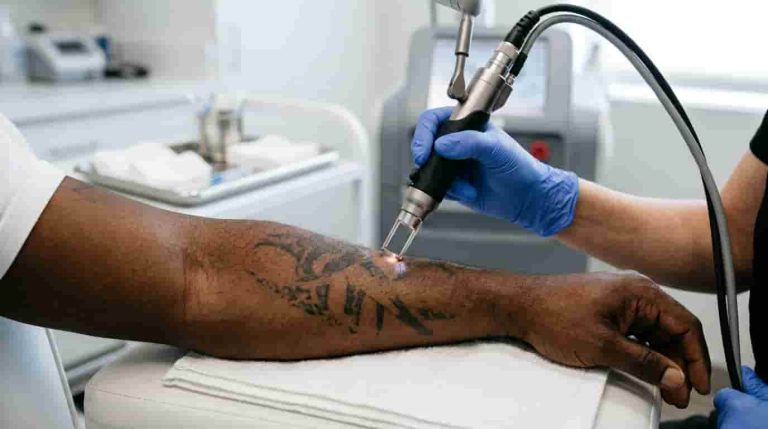
Yes, tattoo removal can be safely performed on individuals across the entire spectrum of skin tones. Advances in laser technology, particularly the development of specialized wavelengths and picosecond pulse durations, have made it possible to treat diverse complexions with high precision.
The essential difference lies in the clinical strategy. When treating skin with higher baseline melanin concentrations, the primary goal shifts from maximum speed to maximum safety. Practitioners must adjust energy levels, pulse durations, and cooling methods to shatter ink without overheating the surrounding epidermal tissue.
While the fundamental removal process remains effective, managing the interaction between light energy and skin pigment requires a customized approach for every patient.
How competitive light absorption works:
- Laser Pulse Delivery: High-intensity light energy travels toward the skin.
- Epidermal Absorption: Natural melanin in the surface skin layer absorbs a portion of the thermal energy, requiring precise wavelength selection to prevent burns.
- Dermal Ink Shattering: The remaining laser energy targets deep tattoo ink particles, shattering them for clearance by the body’s lymphatic system.
Skin Tone Is Only One Factor
While natural pigmentation plays a pivotal role in safety protocols, it is only one piece of a complex puzzle. Your overall response to treatment depends on a combination of variables that work together:
- Ink Pigment and Composition: Darker inks like black, dark blue, and deep red absorb laser energy efficiently, whereas lighter or mixed shades like green, sky blue, yellow, and fluorescent inks require specialized, targeted wavelengths.
- Tattoo Placement: Areas with higher vascularity and strong lymphatic drainage, such as the neck, chest, and upper arms, tend to clear shattered ink faster than distal extremities like the ankles, feet, or fingers.
- Depth and Density of Ink: Professional tattoos generally place larger quantities of ink deeper into the dermal layer than amateur tattoos, requiring higher cumulative thermal energy over multiple sessions.
- Tattoo Age: Older tattoos often feature naturally degraded, fragmented ink boundaries, making them somewhat easier for the immune system to flush out compared to fresh, densely packed ink.
- Individual Immunological Health: Because your lymphatic system is responsible for removing shattered ink particles, factors like circulation, hydration, metabolic rate, and overall health directly impact your fading speed.
Tattoo Removal on Dark Skin: What Should You Know?
Can Tattoo Removal Work on Dark Skin?
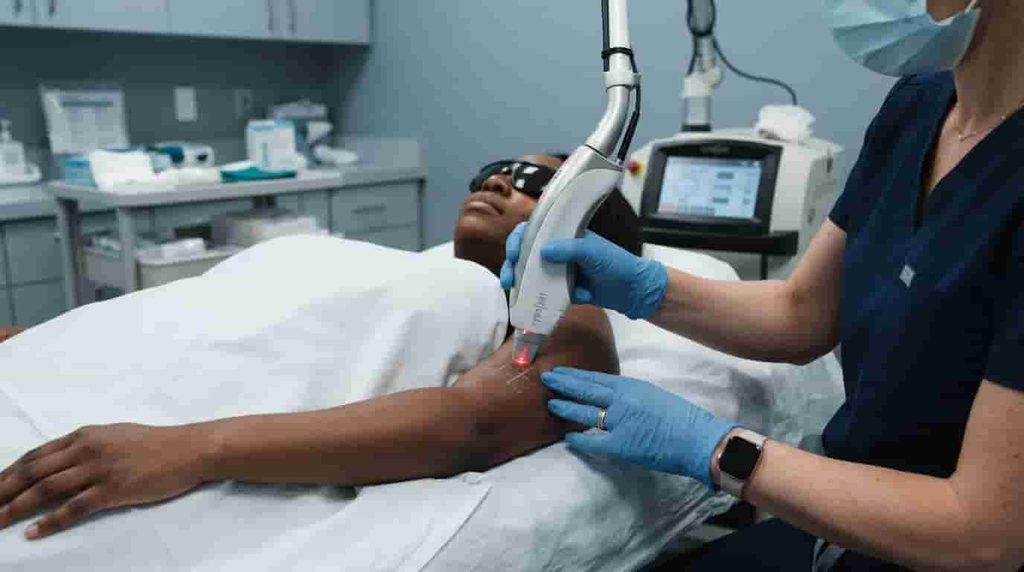
A common misconception is that professional tattoo removal is ineffective or inherently unsafe for individuals with deeply pigmented complexions. Modern aesthetic dermatology has disproven this notion. Darker skin tones—typically categorized as Fitzpatrick Skin Types IV, V, and VI—can achieve successful tattoo fading and clearance when appropriate technology and protocols are applied.
The key to successful treatment on deeply pigmented skin is avoiding excessive heat build-up in the epidermis. When practitioners select longer laser wavelengths that penetrate past surface melanin to reach the dermis directly, the tattoo ink can be shattered without scorching the outer skin layers.
What Are the Main Concerns?
Because surface melanin in darker skin absorbs heat readily, the primary complications associated with laser treatment revolve around temporary or persistent pigment shifts. Understanding these risks empowers patients to spot early warnings and demand conservative treatment plans.
- Post-Inflammatory Hyperpigmentation (PIH): Occurs when thermal irritation stimulates epidermal melanocytes to produce surplus melanin, creating dark patches over or around the treated area.
- Post-Inflammatory Hypopigmentation: Occurs when laser heat injures or temporarily suppresses melanocytes, causing the treated skin to lose its natural color and appear lighter than surrounding areas.
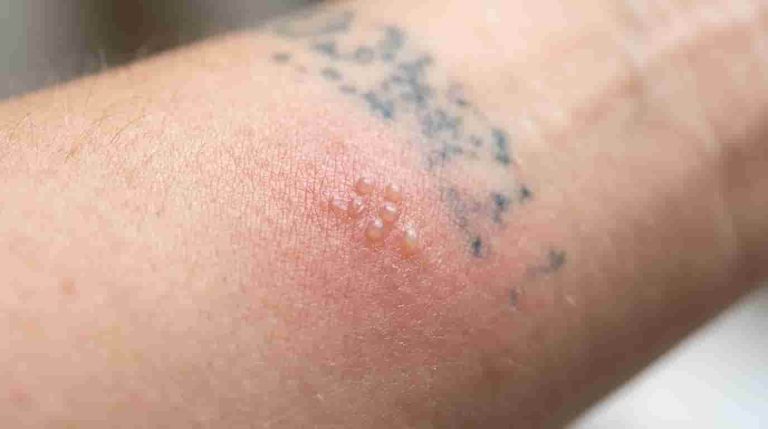
- Thermal Epidermal Blistering: Excessive energy absorption at the surface can cause localized thermal burns and fluid-filled blisters, increasing recovery times and raising the risk of textural scarring.
- Textural Changes and Keloid Formation: Individuals with deeply pigmented skin who have a personal or family history of keloid scarring must approach thermal injury with care, as aggressive laser passes can trigger raised scar tissue.
Why Experience with Darker Skin Matters
Treating skin with elevated melanin levels requires clinical precision. Practitioners must possess a deep understanding of pulse delays, spot sizes, fluence adjustments, and specialized wavelengths.
For instance, using a short 532 nm wavelength on Fitzpatrick Type V or VI skin can lead to immediate surface burns because that specific light frequency is strongly absorbed by epidermal melanin. Conversely, using a 1064 nm wavelength allows energy to bypass surface pigment and strike deep black ink safely.
When exploring options for deeply pigmented complexions, consult detailed medical resources to ensure your provider follows established safety standards. For an in-depth look at wavelength selection, pulse mechanics, and protective protocols tailored to higher Fitzpatrick types, review our dedicated guide on Tattoo Removal for Dark Skin: Does It Work and Is It Safe?
| Fitzpatrick Skin Type | Melanin Density | Primary Laser Strategy |
| Types I – II (Fair to Light) | Low Surface Melanin, Low PIH Risk | Standard spot size; high energy absorption targeting broad ink color spectrums. |
| Types III – IV (Medium to Olive) | Moderate Melanin, Moderate PIH Risk | Extended pulse durations; active tissue cooling; conservative fluence progression. |
| Types V – VI (Dark to Deep) | High Surface Melanin, Elevated PIH/Hypo Risk | Strict 1064 nm wavelength; low fluence; long intervals between sessions (8-12 wks). |
Tattoo Removal on Light Skin: Is Treatment Different?
How Lighter Skin Can Affect Treatment Considerations
Fair or light skin tones (Fitzpatrick Types I, II, and III) present a low concentration of baseline epidermal melanin. This lower melanin density creates a high visual and optical contrast between the natural skin tone and dark tattoo inks. Because surface melanin absorbs minimal laser energy in fair complexions, technicians can often utilize higher energy densities (fluence) without triggering surface burns.
However, lighter skin is not exempt from treatment challenges:
- Multi-Colored Inks: Lighter skin types frequently receive tattoos containing complex colored pigments, including stubborn blues, greens, yellows, and pastel shades. These colors require multiple specialized laser wavelengths (such as 755 nm Alexandrite or 532 nm KTP) to break down effectively.
- Erythema and Sensitivity: Fair skin is prone to prolonged post-treatment erythema (redness), localized edema (swelling), and capillary pinpoint bleeding.
- False Sense of Security: Practitioners may be tempted to escalate energy levels too quickly on fair skin, leading to deep thermal injury or subtle textural scarring.
Can Light Skin Still Develop Pigmentation Changes?
Yes, light skin can experience post-treatment discoloration. Although fair complexions are less prone to severe hypopigmentation, they frequently experience post-inflammatory hyperpigmentation or persistent erythema if treated too aggressively or exposed to sunlight during recovery.
For a comprehensive breakdown of wavelength selection, color clearance, and realistic healing milestones for fairer complexions, explore our guide on Tattoo Removal for Light Skin: What to Expect and How Well Does It Work?
Tattoo Removal and Skin Pigmentation: What Can Happen?
Key variations in post-laser skin pigment include:
- Hyperpigmentation: The skin produces excess melanin, causing the treated area to appear darker than the surrounding natural skin tone.
- Hypopigmentation: The skin loses natural melanin, causing the treated area to appear lighter or chalky-white.
- Residual Ink: Target tattoo pigment lingers deep in the dermis, maintaining the defined shape and color of the original artwork.
Hyperpigmentation
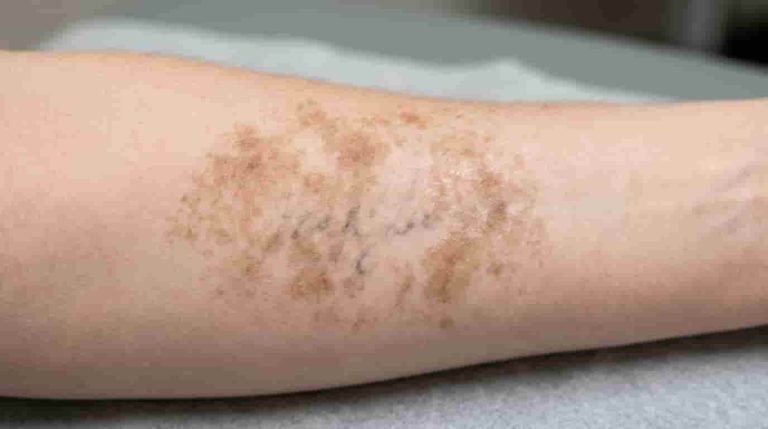
Post-inflammatory hyperpigmentation occurs when thermal energy triggers a defensive reaction in the skin, causing melanocytes to overproduce melanin. This creates darkened, patchy discoloration across the treated zone.
PIH is often triggered by excessive laser energy, inadequate cooling, or UV exposure shortly before or after a treatment session. In most cases, PIH is temporary and fades gradually over three to twelve months as epidermal cells turn over, though it requires strict sun protection to resolve.
Hypopigmentation
Hypopigmentation represents the opposite reaction: the treated skin becomes noticeably lighter than the surrounding untreated area. This occurs when laser thermal energy injures melanocytes or disrupts their ability to synthesize melanin.
Hypopigmentation can present as a pale, washed-out shadow or stark white patches. While melanocyte function often recovers slowly over several months, severe thermal injury can cause long-lasting or permanent depigmentation in affected areas.
Skin Discoloration vs. Leftover Tattoo Ink
Patients frequently confuse post-laser skin discoloration with remaining tattoo ink, leading them to seek immediate follow-up laser sessions. Firing additional laser energy into an area experiencing active hyperpigmentation or hypopigmentation will only compound tissue damage.
- Residual Tattoo Ink: Sits deep within the dermal layer, features defined edges that match the original artwork, and retains distinct blue, black, or colored hues.
- Skin Hyperpigmentation: Sits nearer the surface in the epidermal or upper dermal layers, exhibits soft, feathered edges, and appears as a tan, brown, or slate-gray smudge.
- Skin Hypopigmentation: Appears as a flat, smooth, pale or chalky-white outline where natural skin pigment has been suppressed.
If you are experiencing dark spots, patchy shadowing, or uneven skin tones following a treatment session, review our clinical guide on Tattoo Removal and Hyperpigmentation: Causes, Risks and Treatment Options for detailed recovery pathways and topical management strategies.
What Factors Affect Tattoo Removal Besides Skin Tone?
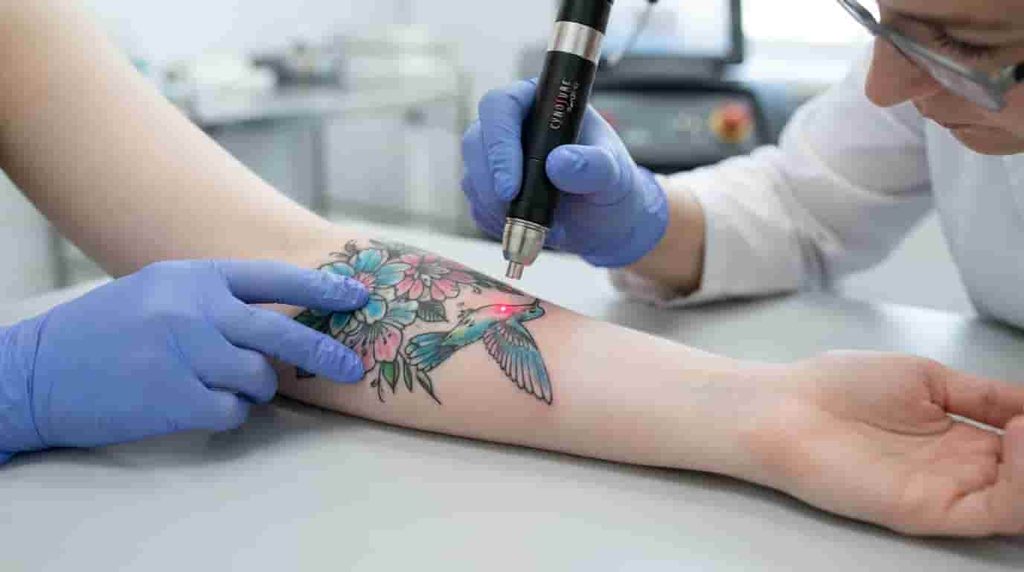
Evaluating a tattoo requires looking beyond skin color alone. A comprehensive assessment weighs all physiological, chemical, and procedural variables to design a safe treatment path.
| Factor | Primary Mechanism | Clinical Impact on Treatment |
| Ink Color & Chemical Base | Specific pigments absorb distinct light wavelengths | Black is easiest to clear; greens, blues, yellows require specialized laser wavelengths |
| Tattoo Size & Density | Volume of ink particles suspended in the tissue | Larger, densely saturated tattoos require more total energy delivered over more sessions |
| Dermal Ink Depth | Distance light energy must travel to hit pigment | Deeper ink requires higher energy or longer wavelengths to shatter effectively |
| Anatomical Location | Density of regional blood supply and lymph nodes | Tattoos on the head, neck, or torso clear faster than those on wrists, hands, or feet |
| Tattoo Age & Type | Structural breakdown of ink over time | Professional tattoos contain denser, deeper ink; amateur tattoos are often shallower and uneven |
| Removal Method | Type of technology and energy used | Advanced picosecond lasers shatter ink with less heat than older nanosecond Q-switched units |
Can Tattoos Be 100% Removed?
A complete, flawless return to pristine, untouched skin cannot be guaranteed for every tattoo. While many patients achieve near-total clearance where no visible ink remains to the naked eye, subtle ghosting, slight textural variations, or minor pigment shifts can linger.
Realistic outcomes across different stages include:
- Complete Clearance: The ink is shattered entirely, allowing the skin tone to match the surrounding area perfectly.
- Faint Ghosting: The ink is visually cleared, but a subtle, shadow-like outline remains visible under bright light.
- Residual Traces: Stubborn trace pigments remain deep in the dermis (a common occurrence with greens and yellows).
- Textural Change: The ink is cleared, but subtle tissue changes or minor pigment variations remain present.
Whether a tattoo can be completely removed depends on ink chemistry, application depth, scarring from the original tattooing process, and your body’s immune response. During your initial consultation, your provider should evaluate these factors to set realistic fading expectations rather than promising absolute perfection.
Who Should Not Get Tattoo Removal?
Tattoo removal is a medical procedure that places temporary stress on your skin barrier and immune system. Certain health conditions, skin states, and lifestyle factors require pausing or avoiding treatment altogether.
- Active Skin Infections or Open Wounds: Laser treatments should never be performed over active bacterial, viral (such as Herpes Simplex), or fungal infections, or unhealed wounds.
- Recent Sun Exposure or Tanning: Tanned skin contains hyperactive melanocytes, sharply increasing the risk of thermal burns, blistering, and severe hyperpigmentation.
- Pregnancy and Breastfeeding: Energy-based removal procedures are contraindicated during pregnancy and lactation to prevent stress, potential systemic infection risks, or altered pigment responses due to hormonal fluctuations.
- History of Keloid Scarring: Individuals prone to keloid or hypertrophic scarring should exercise extreme caution, as laser micro-trauma can trigger abnormal collagen growth.
- Use of Photosensitizing Medications: Systemic medications like oral isotretinoin (Accutane) or certain antibiotics raise light sensitivity, requiring a washout period before treatment.
- Unverified DIY Removal Attempts: Using home salabrasion, DIY chemical acid kits, or unverified removal creams can lead to severe chemical burns, permanent scarring, and severe discoloration.
When to seek immediate medical advice:
- Spreading redness, red streaks, or skin that feels increasingly hot to the touch.
- Persistent, painful blistering accompanied by yellow discharge or pus.
- Systemic symptoms like fever, chills, or swollen lymph nodes.
- Severe, worsening skin darkening or sudden loss of natural pigment.
If you experience severe thermal blistering or skin surface damage post-treatment, consult our detailed care guide on Tattoo Removal Burns: Causes, Symptoms, Treatment and Healing
to manage healing safely and protect against secondary infection.
What I Wish I Knew Before Laser Tattoo Removal
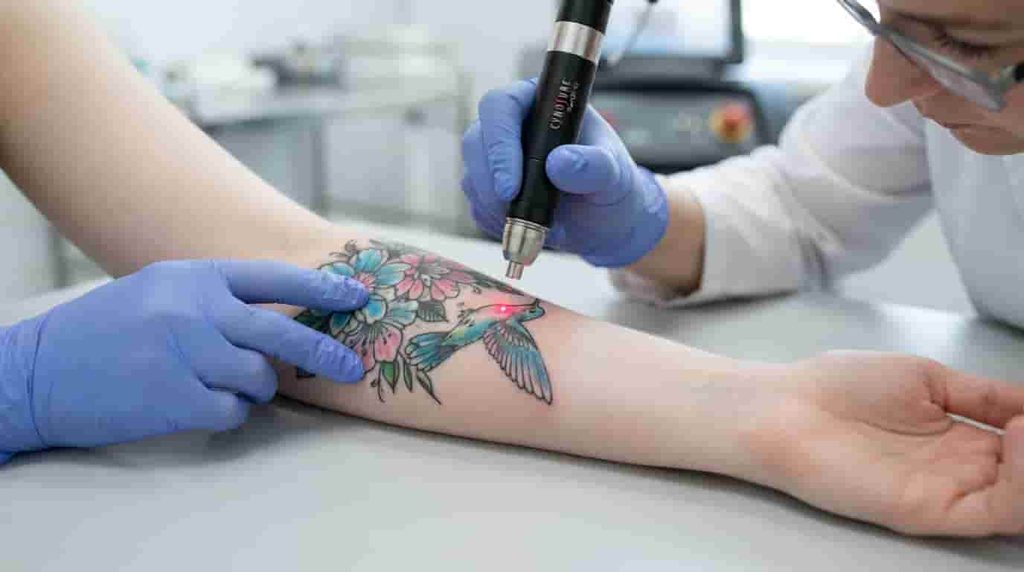
Navigating laser tattoo removal becomes much easier when you understand the clinical reality of the process. Here are six key insights to keep in mind:
- Results Are Not Guaranteed: Every immune system clears shattered ink at its own pace. No practitioner can accurately predict the exact number of sessions required.
- Skin Tone Requires Custom Settings: Your natural skin color dictates the energy levels, laser wavelengths, and safety margins your provider must use.
- Fading Happens Between Sessions: Lasers break up ink, but your body’s lymphatic system clears it away slowly over six to twelve weeks.
- Pigment Changes Are Possible: Temporary lightening or darkening of the skin can occur, particularly if post-care protocols are ignored or sun exposure occurs.
- Provider Expertise Triggers Success: Equipment quality matters, but the skill and experience of the laser technician play the biggest role in keeping your skin safe.
- Aftercare Directly Impacts the Outcome: Keeping the area clean, cool, hydrated, and protected from UV light prevents complications and promotes optimal healing.
How to Choose a Tattoo Removal Specialist
Selecting a qualified practitioner is the most effective way to minimize risks and ensure optimal ink clearance, particularly for individuals with medium to dark complexions.
Specialist evaluation checklist:
- Medical oversight by a board-certified dermatologist or qualified physician.
- Advanced laser platforms offering multiple wavelengths (such as 1064 nm Nd:YAG).
- Documented experience treating your specific Fitzpatrick skin type.
- Mandatory pre-treatment patch test protocol.
- Transparent discussion of risks, costs, and realistic timelines.
- Detailed written pre- and post-treatment care instructions.
Questions to Ask Before Treatment
During your initial consultation, ask these key questions to evaluate a specialist’s experience:
- How do you evaluate my specific Fitzpatrick skin type before setting laser parameters?
- What laser wavelengths and pulse durations do you use for my skin tone and ink colors?
- Do you perform a mandatory patch test before treating the full tattoo?
- What protocols do you follow to prevent and manage hyperpigmentation or hypopigmentation?
- Can you share before-and-after photos of patients with a similar skin tone and ink density?
- What step-by-step aftercare instructions do you require during the healing phase?
Don’t Choose a Clinic on Cost Alone
While comparing clinic prices is a practical step, choosing a provider based solely on the lowest price per session can be risky. Low-cost facilities may rely on outdated Q-switched lasers, lack active skin cooling equipment, or employ technicians with minimal training in treating dark skin types. Repairing severe hyperpigmentation or scarring from an improperly executed treatment costs far more in the long run than investing in an experienced specialist from the start.
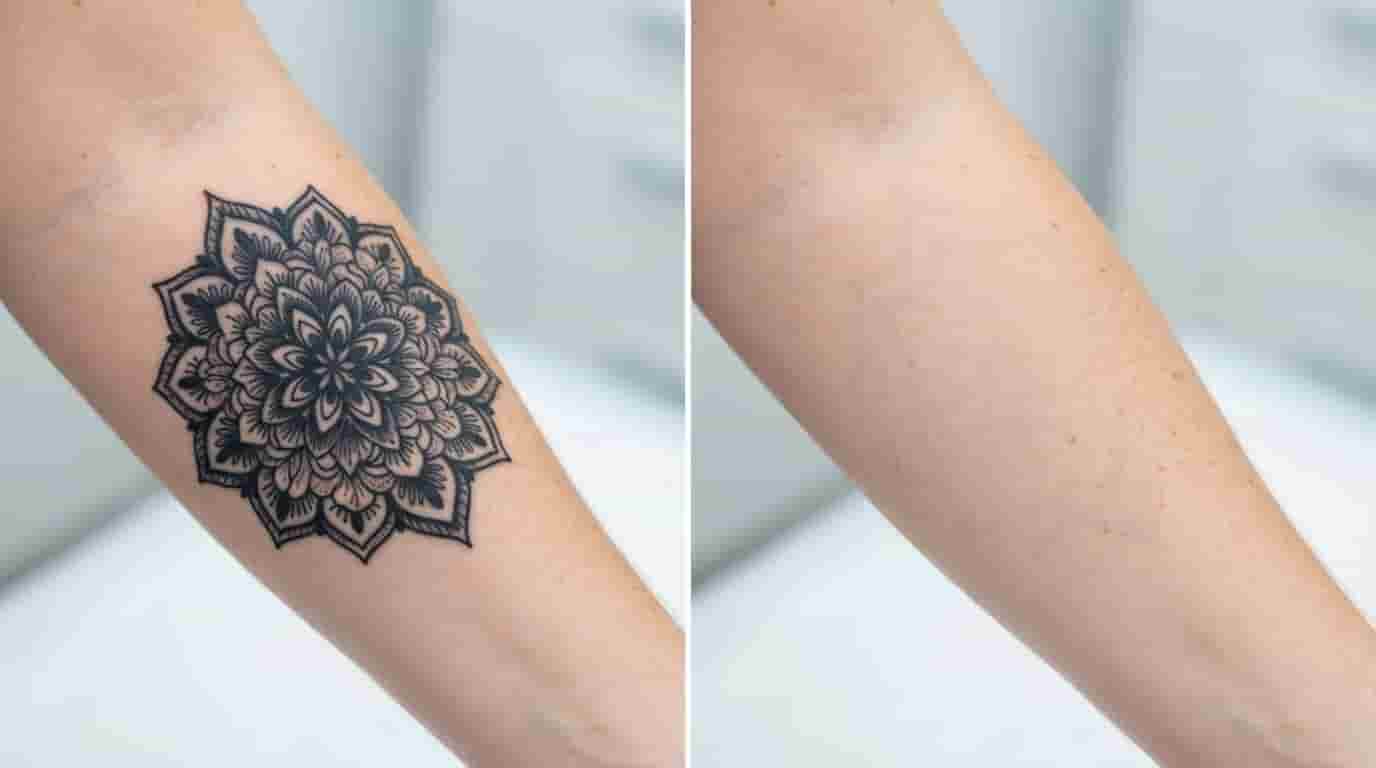
Tattoo Removal Before and After: What Should You Look For?

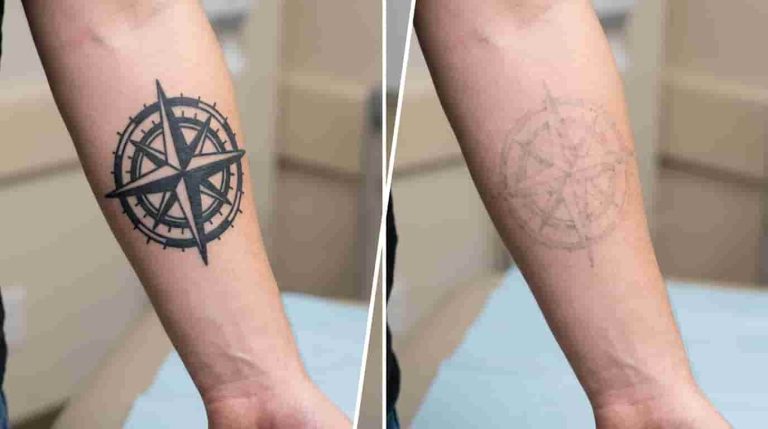
Reviewing before-and-after photographs helps establish realistic expectations, but these images should be evaluated critically during your consultation.
- Match Your Complexion: Look specifically at case studies featuring patients with a similar natural skin tone to yours. Fading performance on fair skin provides little insight into how darker skin will heal under the same laser settings.
- Compare Ink Colors and Saturation: Evaluate tattoos that match your ink colors, line thickness, and density.
- Check Skin Texture: Look closely at the “after” photos under good lighting. The skin should appear smooth and natural, without raised scar tissue, shiny keloids, or chalky hypopigmentation.
- Look for Consistent Lighting: Ensure before-and-after photos share similar lighting, angles, and camera settings. Flashing bright light onto an “after” image can artificially wash out residual ink or hide pigment changes.
Tattoo Removal Options and Skin Tone
Laser Tattoo Removal
Laser removal remains the gold standard in modern aesthetic medicine. Advanced Q-switched and picosecond laser platforms deliver precise light energy to shatter ink trapped in the dermis. Picosecond lasers shatter ink into finer particles using photomechanical pressure rather than pure thermal heat, making them safer for delicate skin barriers and complexions prone to pigment changes.
Other Tattoo Removal Options
- Surgical Excision: Involves cutting out small tattooed areas and suturing the surrounding skin back together. While excision guarantees complete ink removal in one step, it leaves a permanent surgical scar and carries elevated keloid risks for darker skin tones.
- Dermabrasion: Mechanically sands away outer skin layers to reach dermal ink. This invasive procedure causes widespread tissue trauma and carries a high risk of severe post-inflammatory hyperpigmentation and scarring across all skin types.
What About Tattoo Removal Creams?
Over-the-counter fading creams claim to erase tattoos by dissolving surface skin layers with mild acids or bleaching agents. These topical products cannot penetrate deep into the dermal layer where tattoo ink sits. At best, they act as mild exfoliants; at worst, they cause severe contact dermatitis, chemical irritation, and long-lasting discoloration on fragile skin.
Common Mistakes People Make When Removing Tattoos

- Assuming Skin Tone Alone Dictates Results: Overlooking how ink chemistry, depth, location, and immune health impact fading performance.
- Expecting Complete Ink Erasure: Failing to recognize that subtle ghosting or minor textural changes can remain after treatment.
- Selecting the Cheapest Clinic Available: Prioritizing session price over provider credentials, advanced technology, and skin safety protocols.
- Ignoring Pigmentation Risks: Proceeding with treatment without discussing natural melanin levels, post-inflammatory risks, or patch testing.
- Comparing Results to Online Photos: Expecting your body to clear ink at the exact same rate as viral before-and-after photos.
- Attempting DIY Removal Methods: Using abrasive home methods or unverified chemical creams that burn the skin and cause severe scarring.
FAQ: Tattoo Removal and Skin Tone
Does skin tone affect tattoo removal?
Yes. Natural skin color determines how much laser heat is absorbed by surface melanin versus the target tattoo ink. Your skin tone guides which laser wavelengths, energy levels, and pulse durations your provider must use to keep your skin safe.
Does tattoo removal work on dark skin?
Yes. Professional tattoo removal is effective for dark skin when practitioners use longer laser wavelengths (such as 1064 nm Nd:YAG) that penetrate past surface melanin to target deep ink without scorching the outer skin layers.
Can tattoo removal change your skin color?
Yes. Laser treatments can trigger temporary or persistent pigment shifts. Skin can produce extra melanin and turn darker (hyperpigmentation) or lose pigment and turn lighter (hypopigmentation). Following proper aftercare protocols and avoiding sun exposure reduces these risks.
Does tattoo removal make skin look normal again?
In many cases, treated skin fades back to its natural baseline tone and smooth texture over time. However, subtle ghosting, minor textural variations, or light pigment shifts can linger depending on original tattoo scarring, ink depth, and healing performance.
How can I reduce the risk of skin discoloration during tattoo removal?
Choose an experienced laser specialist, request a pre-treatment patch test, protect the area from sun exposure before and after sessions, apply broad-spectrum SPF 30+ daily, and follow all post-treatment care guidelines.
Conclusion: Tattoo Removal and Skin Tone
Tattoo Removal and Skin Tone are intrinsically linked because natural epidermal melanin directly influences how laser energy travels through tissue. While elevated skin pigmentation requires careful parameter adjustments, longer laser wavelengths, and longer rest intervals between sessions, darker skin does not prevent successful tattoo clearance. Similarly, fair complexions benefit from customized treatment plans to manage multi-colored inks and protect delicate skin.
Ultimately, achieving a clear canvas safely comes down to working with your skin’s natural biology rather than rushing the process. Successful fading depends on choosing a qualified specialist who understands pigment mechanics, avoiding aggressive high-heat energy settings, and protecting your skin barrier throughout the recovery process.
To build a safe, personalized tattoo removal strategy, explore our detailed guides on Tattoo Removal for Light Skin, Tattoo Removal for Dark Skin, Tattoo Removal and Hyperpigmentation, and Tattoo Removal Burns
.
3 Comments